Concertina
The concertina belongs to a
class of instruments known as Free Reed instruments, which also
includes accordions and harmonicas. It was developed in 1829 and
1830 by Sir Charles Wheatstone after several years of building
prototypes, a few of which still exist (in 1829 he patented its
direct predecessor, the Symphonium, but he did not actually
patent the concertina itself until 1844). He founded the firm of
Wheatstone & Co to manufacture concertinas, each one
expensively hand-made by highly skilled craftsmen, and at first
the concertina was very much an instrument of the middle and
upper class drawing room. Its fully chromatic range was suited to
classical pieces, with its fast action lending it to "party
pieces" such as The Flight of the Bumble Bee. In due course
other firms such as Lachenal and Jeffries were founded (several
by ex-Wheatstone employees) the cost of concertinas lowered, and
the instrument moved out of the drawing room and into the world
of popular music.
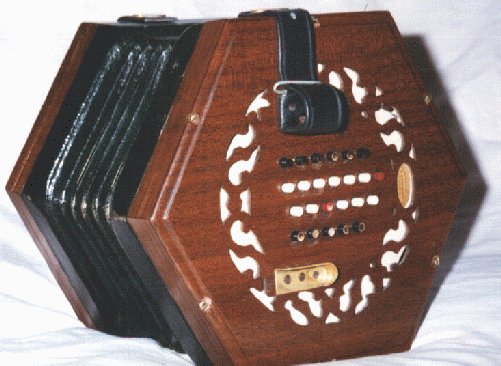
Wheatstone
Baritone English Concertina
This is the original concertina
as invented by Wheatstone. You can recognise one by the 4
parallel rows of buttons and by the supports for thumb and little
finger on each end. The larger baritone and bass English
concertinas frequently have wrist straps as well, to help with
the greater weight of the instrument.
In the 20th Century the
instrument gradually fell out of favour, and one by one the
makers closed or went out of business. Wheatstone's themselves
(by this time owned by Boosey & Hawkes) closed in 1968.
What saved the instrument from gradually dwindling away into obscurity, as far as the UK was concerned, was the Folk Revival from the '60s onward. Performers looking for a different sound from the ubiquitous guitar were drawn to the concertina for all its old virtues of versatility and flexibility combined with portability. In addition the concertina permitted song accompaniments that were free of the rhythmic straitjacket that the guitar in unskilled hands tends to impose upon everything. For folk and morris dance the anglo concertina and its accordion cousin the melodeon proved ideal. People started making concertinas again, many of a quality to equal anything made by the old companies.
Kind Permission for use of this copyrighted information by Chris Timson.

|
